Monday, September 15, 2014

Coffee Education: Good Land Organics

My new job is taking me beyond wine into coffee, a beverage I know very little about. 


To help educate me I was sent to Good Land Organics farm in Goleta where farmer Jay is growing coffee where no one thought it would grow: California.


 The farm grows exotic fruits first and foremost.

 Dragon fruit.

 Finger limes, my new favorite.

 This was just picked from the tree, and the turgidity is enough to make the little pods pop out.  The limes reminded me of grubs, and after I opened one and put the contents in my mouth, it really felt like I was eating an insect.  A delicious citrus insect.

 Strawberry guavas.

Bananas. 

Avocados.

 Jay peaking at the cherries on a coffee tree.  This cultivar is very bushy and the cherries are hidden under the shade of the leaves.
At Good Land, Jay has planted several cultivars next to each other to experiment with what grows best.  If you look closely you can see that these two trees are very different.

This is yet a different cultivar that never turns red, but stays yellow.  Seeds = Beans!

The darker the cherry, the riper the fruit.  A single plant will have multiple passes to only pick the ripest cherries.  This is very different from wine, where once a block is ready, you pick it all.  I was surprised to learn how time intensive the process is.

 Freshly picked coffee cherries.

 This is me removing the skin from the beans, called pulping.

Then we put the beans in a little water and measure the starting pH.

 The beans undergo a short fermentation 12-36 hours (unlike wine which is 3 to 10 days).  The fermentation is typically perferomed by the native yeast on the fruit.  What we are experimenting with is inoculating with known strains.  The tub on the right has inoculated yeast, the tub on the left in native.  You can see how much more activity (foaming) is coming from the inoculated tub.

 The fermentation in wine is to produce alcohol, the fermentation in coffee is to clean the bean of the mucilage (slimy pulp) that clings to the seed.  The fermentation is "done" when the beans "feel" clean, that is, no longer sticky.  This is done by feel.  You stick your hand in and ask "are they sticky?" is the answer is yes, you wait, if the answer is no, the fermentation is done!

Then the beans are dumped on the screen and quickly washed.

 The beans dry on the racks for 7 to 14 days.  The beans look beige because they are covered by a layer of parchment.

 Then they are hulled.  This machine removed the parchment layer to expose the green bean.

Here you see the small green beans and yellow parchment layer.

And this is the genius way a small producer removes the parchment from the green beans.  She runs them in front of a fan.  The light parchment flakes fly off and the beans drop to the colander.


Then the green beans "rest" for about 3 months before they are roasted.  Unfortunately I did not see the roasting process.

 Then eventually it's time to evaluate the coffee through a cupping.  The involves pouring boiling water over the fresh grounds, letting them steep quickly and letting a cap form.  These steps are very time sensitive, note the iphone keeping track of the seconds.

 Then you use a cupping spoon to break the cap and the grounds fall to the bottom of the cup.  It's important to notice the aroma when this happens and then to taste, I mean, loudly slurp the coffee.  The louder the better!

 This picture really made me feel like I was in a farm.  Beans drying in the foreground, fruit pickers taking their lunch, and Jay's dog and his bbf the duck strolling through the middle of it.

 In a separate location Jay has a green house.

 Baby coffee plants.

The also do weddings!  Lovely place for a party.

View from Amtrak window.  Train ride home from Santa Barbara to San Diego.

I noticed many parallels between wine and coffee production.  There is a lot of overlap between wine nerds and coffee nerds.  I'm looking forward to holding nerd status in both.

-L

Thursday, August 21, 2014

Museo del Vino and Deckman's

The Museo del Vino is a giant gorgeous building dedicated to wine education.

The inside has historical wine information and lots of information about winemaking.

But I prefer the architecture and the landscaping.

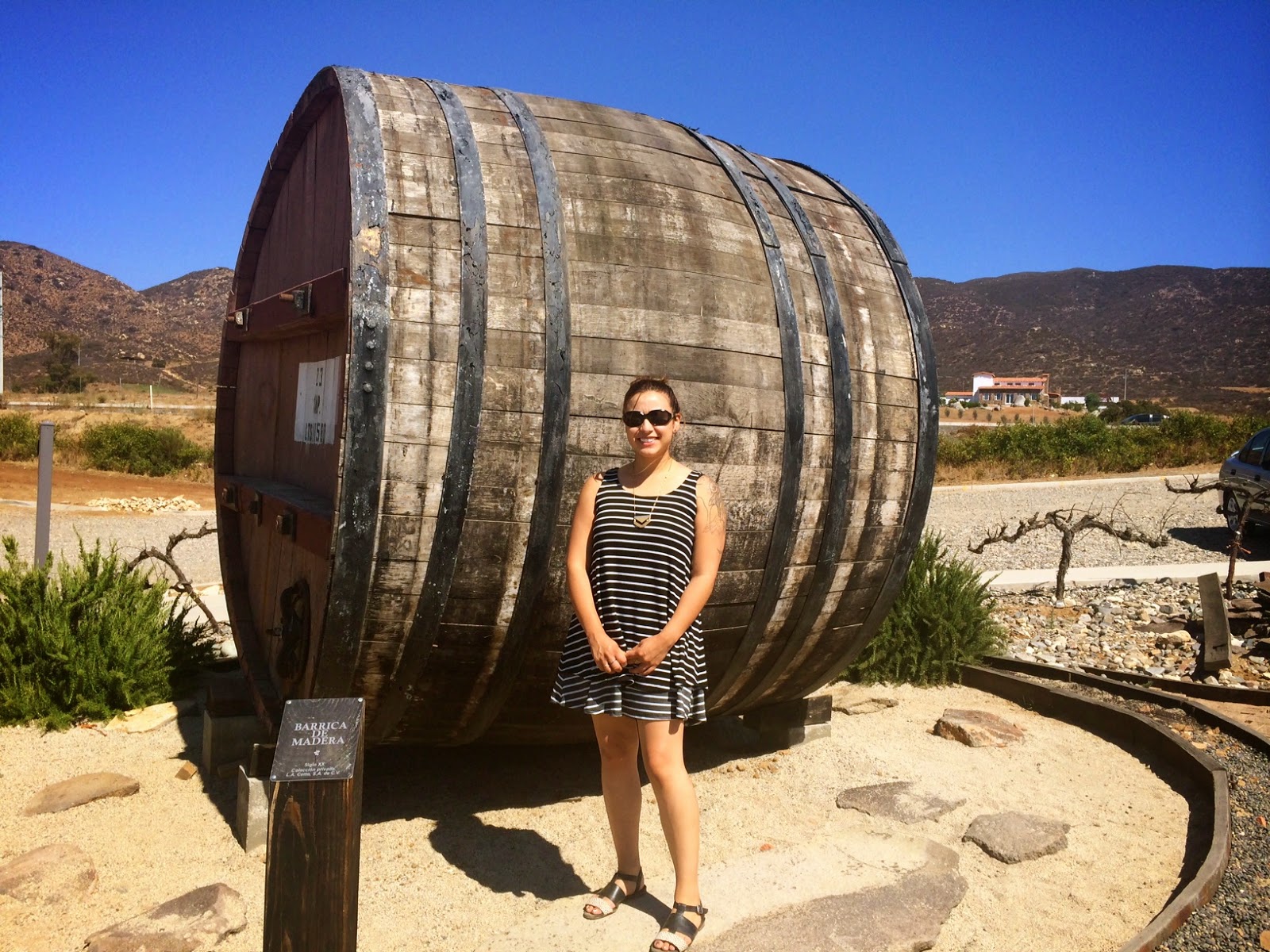
Out in front the have a garden of old winemaking equipment.

They've also layered the grounds with lots of texture.

Bottling equipment.  Old corker.

Tractor.

I love the use of stone and brick and glass and barrel staves.

Mosaic.

All the green is broken wine glass bottles.

Barrel staves and corks.


Valle de Guadalupe has some fantastic restaurants.
One of my first visits was to Deckman's.

Very casual but lovely setting.

The chef Drew Deckman preparing lunch.  Fresh ingredients and great flavors.

The eating area and kitchen are all outside.
It's a little hidden but worth the scavenger hunt to eat here.


And now this . . 

Small winery co-op in Baja.

-L

Thursday, August 7, 2014

Baja Mexico - Ensenada & Valle de Guadalupe

Apologies and regrets for the long absence, mostly due to new job and spotty internet coverage in Mexico.
 
I want to share some great things Baja has to offer and introduce the wineries of Valle de Guadalupe.  And mostly, just want everyone to come visit!
 

Headed into Mexico.

Arid landscape, but yes, they grow grapes here.

View from my hotel in Ensenada. Hotel Corona.

Hotel stair case.
 
Great place for dinner.  Lots of super fresh fish.

Like these guys!
 
Ensenada Boats.


One of these days I'll have free time to take one out.

Liceaga winery.

Panorama.

Monte Xanic Winery.  Recently underwent major renovations. A longer post on these guys coming up.

The lake at Monte Xanic.

View of Valle de Guadalupe.
 
El Cielo Winery.
 
Barrel Art.


Lunch at El Cielo.  The foodie movement has made it to Baja.

Baron Balche winery.

Mayan numbers on the labels, some of the priciest stuff in the valley.
 

I'm a sucker for barrel art.

Winner for my favorite use of barrels: as a sink.

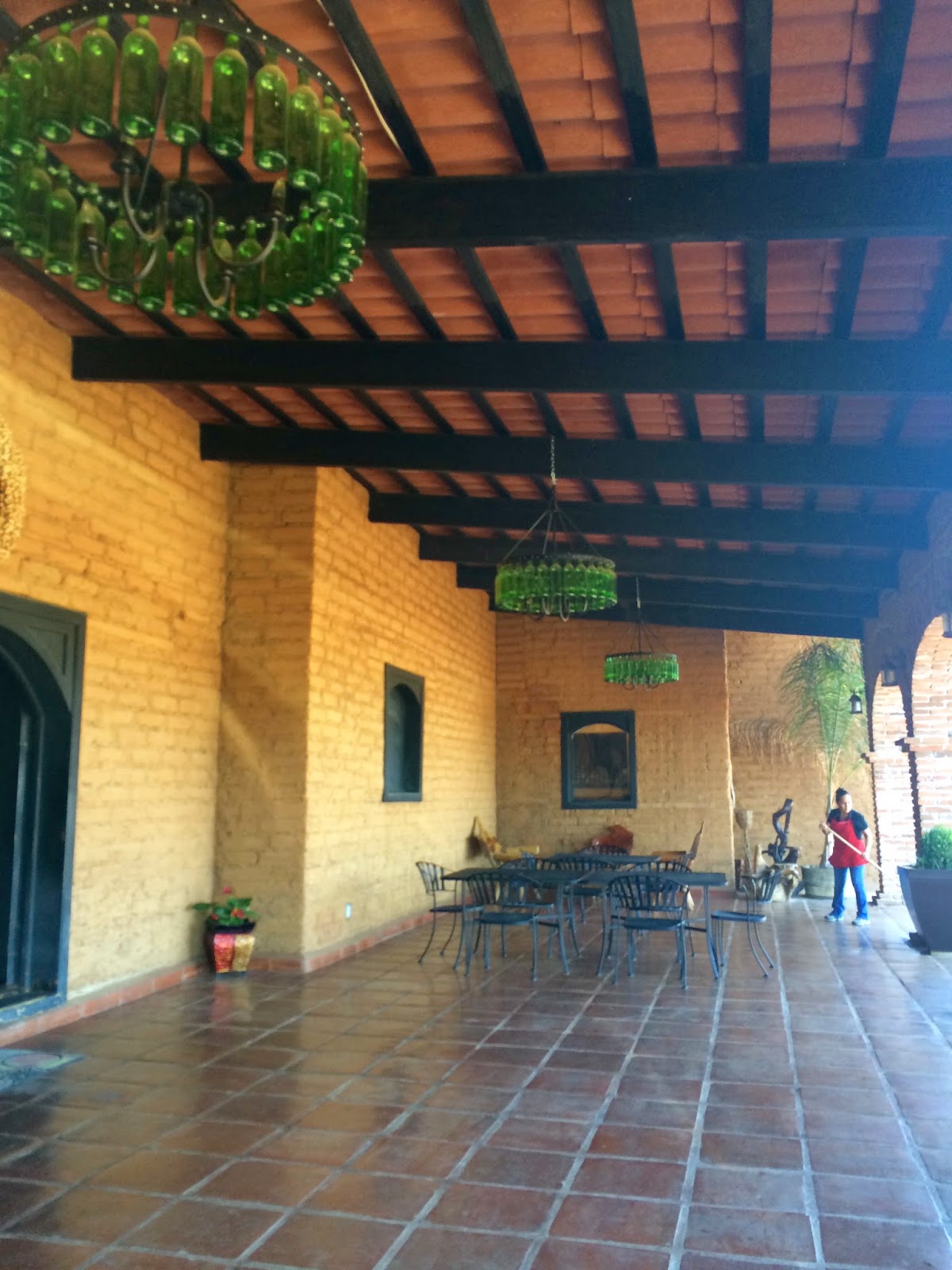
Wine bottle chandeliers at Balche.

Other view of the valley.
 

-Lucia